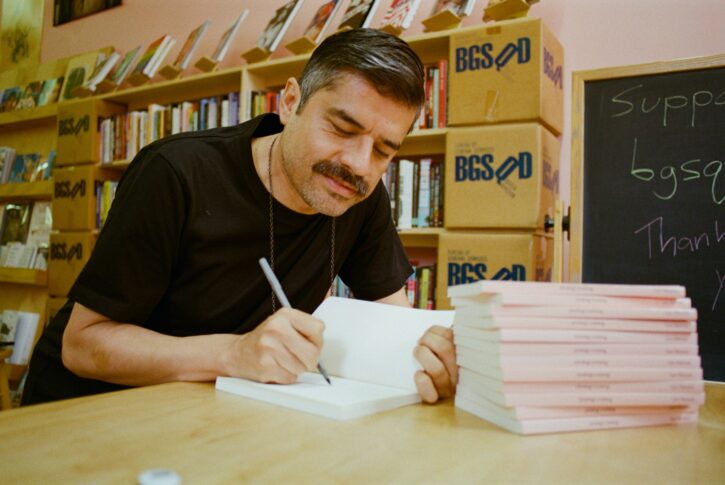
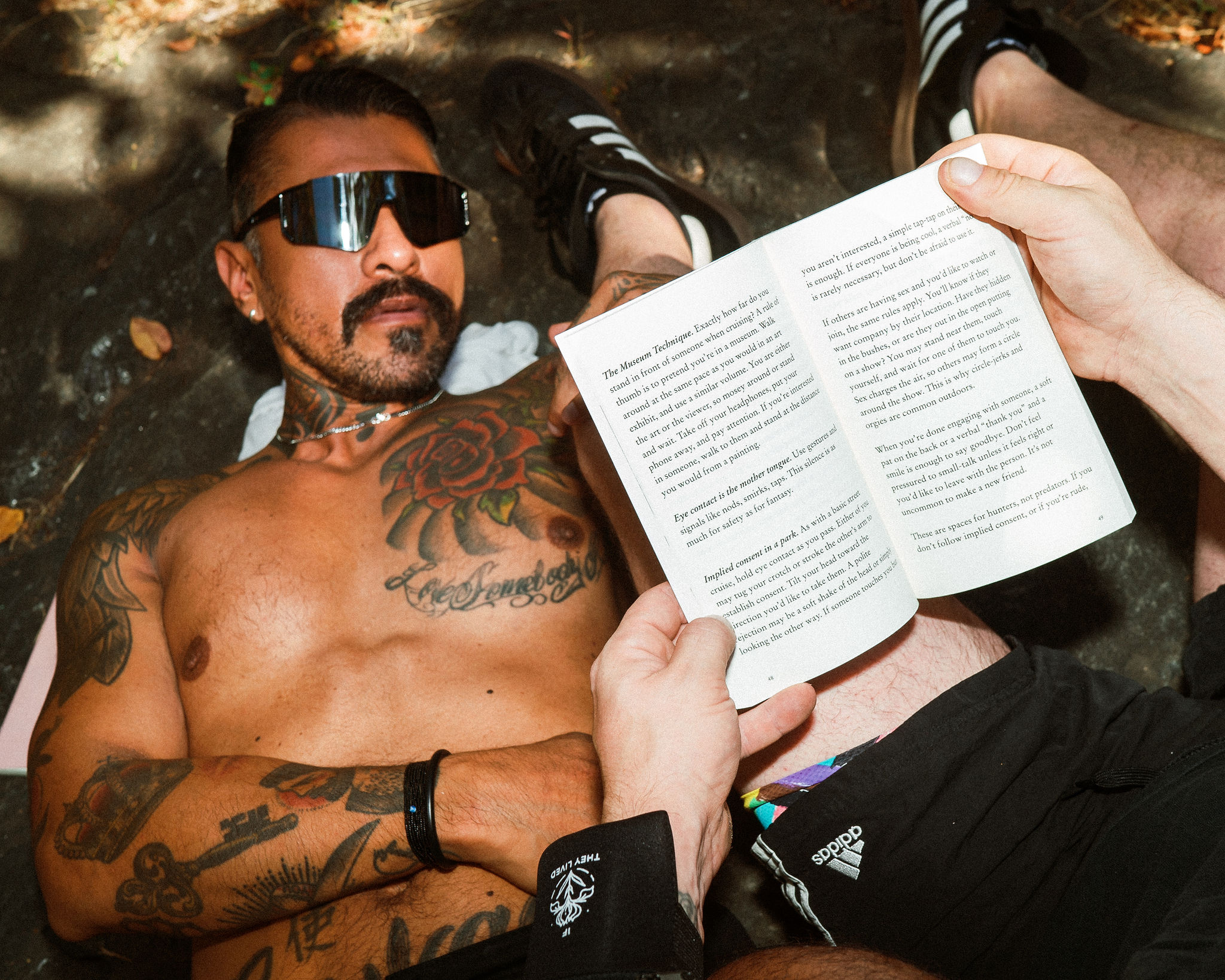
If you’re looking for alternatives to the DMs and dick-pics that define our search for connection on hook-up apps, you’re not alone.
In our latest interview with Leo Herrera – author of (Analog) Cruising – he shares his insights as to why we might be seeing a renaissance of old-school in-person body-language. Check it out below.
Why was Analogue Cruising a book that you wanted to write?
I began writing this manual during the Mpox outbreak. I’ve been working in public health outreach for a long time – particularly around HIV stigma and STIs.
It was counterintuitive but I felt that after the Covid lockdowns and the Mpox outbreak, cruising was making a comeback.
The pandemic really changed the way that we viewed sex and gave everyone a new appreciation for real-life spaces and face-to-face connections.
I also observed that dark rooms and sex clubs and saunas and parks were all starting to become populated by a much younger generation.
Can you remember how you first discovered and started to explore in-person cruising?
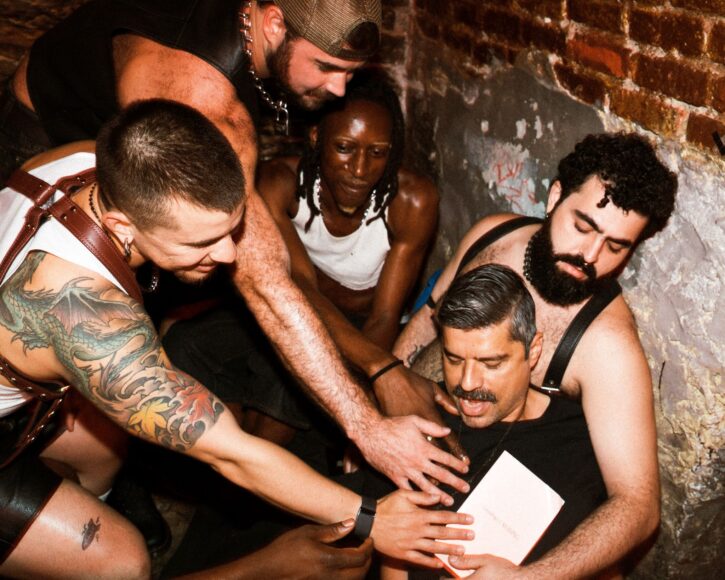
It was in San Francisco – going to the sex clubs, going to the bathhouse there, the parks, going to the Folsom Street Fair.
Growing up, I read a lot of gay memoirs – often reading about the ritual and history of cruising. It was always part of my sexual diet.
I was never very good at apps. I always found analogue cruising to be much more satisfying to me and to be much more liberating.
There is something about the satisfaction of going to a local bathhouse or park cruising or street cruising or picking up people at a bar. That’s one of the things that I write a lot about in the book – cruising is such a huge toolkit and one of those things is just picking up people at a bar.
I never understood how gays would go to a bar and then get on their phone when it’s like all around them, right? They’re right here. They’re zero feet away, in real life.
Are you saying that hook-up apps have effectively ruined gay sex?
No – I think it’s really difficult to ruin gay sex.
Gay sex has been attempted to be ruined by police brutality and the closet and religion and AIDS and all sorts of things.
Hook-up apps are a form of social media. That’s what they’ve become. They are another Instagram, they are another Facebook, they are another Twitter. We now realise that those platforms have really affected the way that all of us communicate, the way that they have divided our communities, affected our body image, the data and the privacy elements of it.
I don’t think hook-up apps have ruined gay sex but I think they have really affected the way that we communicate about sex and they have really affected the way that we function empathically with one another. Hook-up apps allow us to reject each other in the worst possible ways.
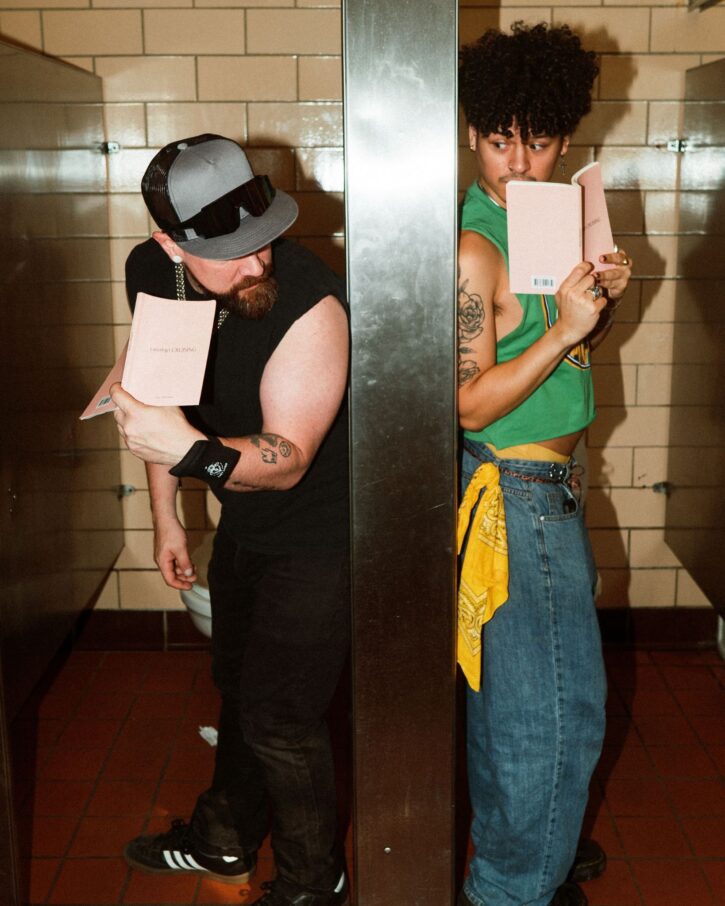
You can’t ghost somebody in a bathhouse or at a bar. You can’t tell them that you’re not into their race or that your their dick is ugly when you’re talking to them in person. The apps have allowed us to normalise really disgusting behaviors that wouldn’t be acceptable in real life.
Hook-up apps are just one single tool in the arsenal. For me, they are the least effective tool sexually, because they are skewed toward certain bodies and certain demographics.
When you order sex in like you would order take-away food or a taxi, you’re removing the friction of it. In theory that sounds nice, but after you remove all that friction, you end up removing the adventure and the spontaneity of it as well.
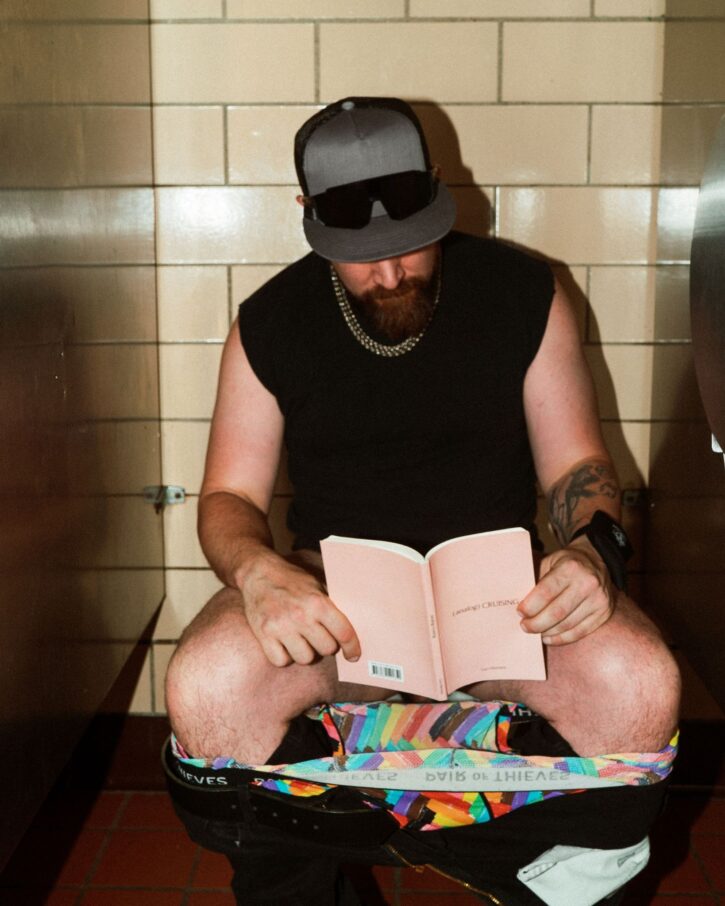
Who have you written (Analog) Cruising for? Is it just for younger guys who have grown up in the age of apps?
It’s popular with younger people but also very popular with older people – people older than me – because there’s so much history in it and there’s so many personal stories. It’s also become very popular with trans folks and autistic folks as well. And a lot of lesbians buy it.
Everybody loves the book and I think that’s because it’s speaking to a universal need for in-person connection, but also a need for queer history education that we don’t get very often.
The book is written as me talking to my younger-self and having a dialogue. There’s a lot of really funny moments in the book, but there’s also a lot of failures in there where I don’t understand what’s happening, or I am misreading a moment with somebody, or I’m trying to use sex to validate myself and it doesn’t work out like it should.
There’s a scene in the book where I’ve just gotten in a terrible fight with my boyfriend and I go cruising in a park and I don’t feel very great about it. But there’s also a moment where I do feel wonderful and it does provide what I needed it to.
The book also includes things that I would have wanted to know. The first time I went to a bathhouse, I didn’t know how the front desk worked, and that’s such a terrifying thing your first time if you’re like twenty. It tells you that they’re going to give you a key, you’re going to leave your ID, you’re going to pay an entry fee. There’s also explanations of how consent works and how consent in a bar works differently than in the dark room and differently than in a sauna and differently than in a park.
Cruising has an intrinsic value to our community. Whether it’s a funny conversation in a dark-room or giggling with somebody smoking a cigarette in a park, relaxing in a sauna with a friend – all of those things have intrinsic value outside of sex. That’s really important, and that’s what we’re losing in a digital cruising space.
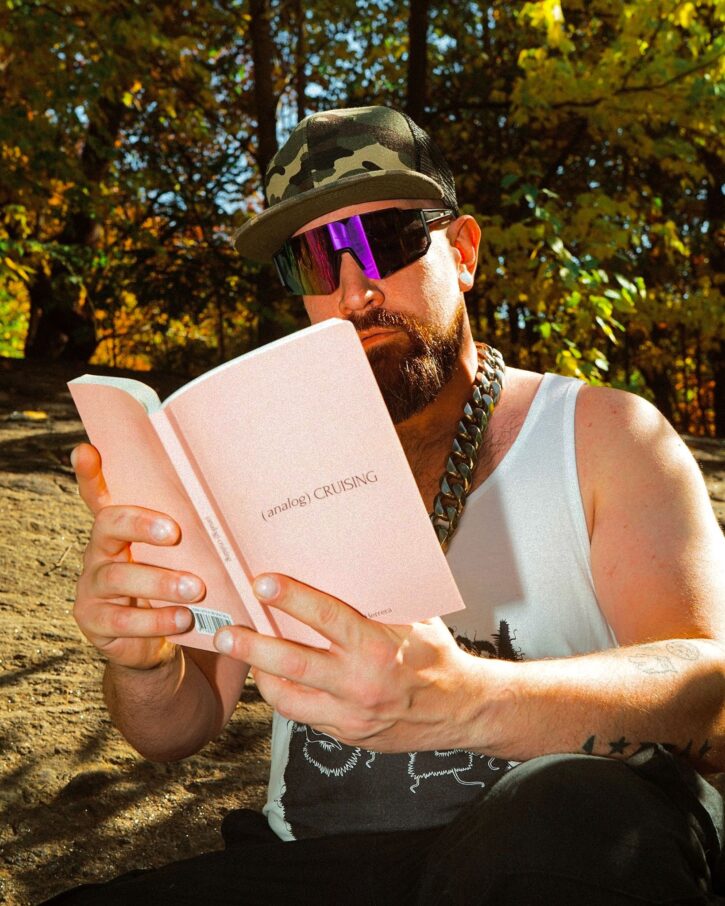
How has the process of writing the book evolved your understanding and perception of queer sex and intimacy?
I think I’ve realised the true scope of queer sexuality. It’s really expanded the way that I see it and how it means different things for different people.
I’ve also realised how connected we all are – politically, socially, and sexually.
Plus, the inevitability that I felt about digital sex doesn’t exist anymore. We’re learning the old ways – we’re experiencing cruising through a different lens.
(Analog) Cruising by Leo Herrera is now available
Follow Leo Herrera on Substack